PDF Accessibility Overlay (prototype)
Public school districts nationwide are facing an unprecedented operational bottleneck. Between the Department of Justice’s updated ADA Title II regulations and tightening local mandates, districts must bring massive libraries of web content and electronic documents up to strict digital accessibility benchmarks.
While the legal technicality points to WCAG 2.1 Level AA, forward-thinking public agencies are aggressively targeting WCAG 2.2 Level AA to future-proof their ecosystems against immediate remediation cycles.
The biggest hurdle in this push? Legacy documents. Years of uploaded forms, board agendas, and school policy sheets are currently sitting on district servers as static, inaccessible PDFs. Manually converting, tagging, and rebuilding thousands of these files by hand is a strain that risks overwhelming internal IT and web teams.
To prove that this problem can be tackled programmatically without massive manual overhead, I built a lean, automated engineering solution: autoPDFToHTML.
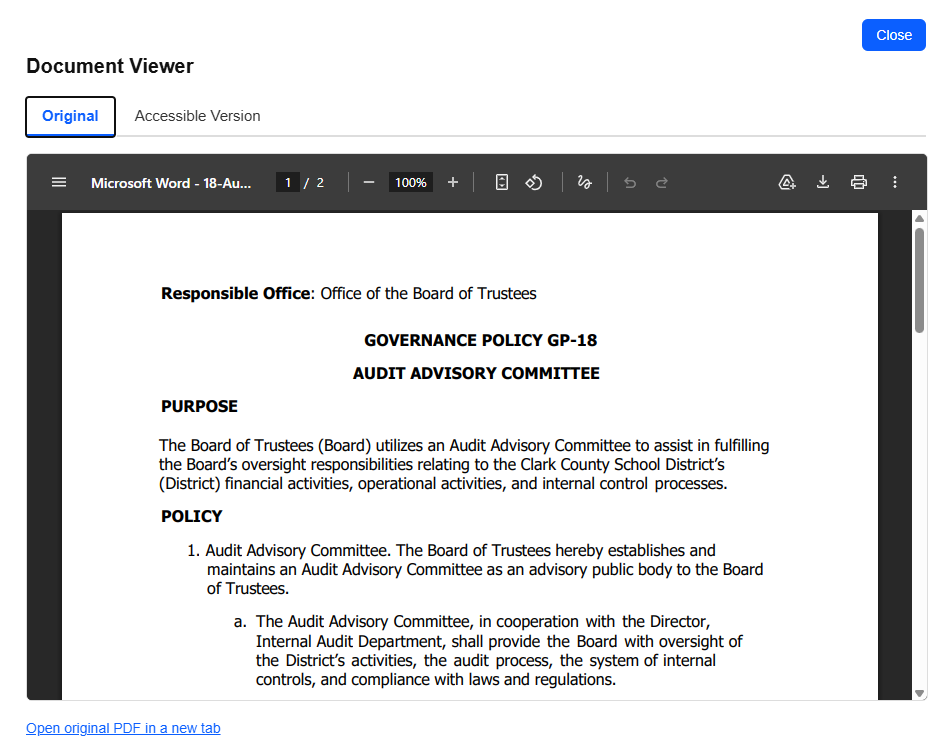
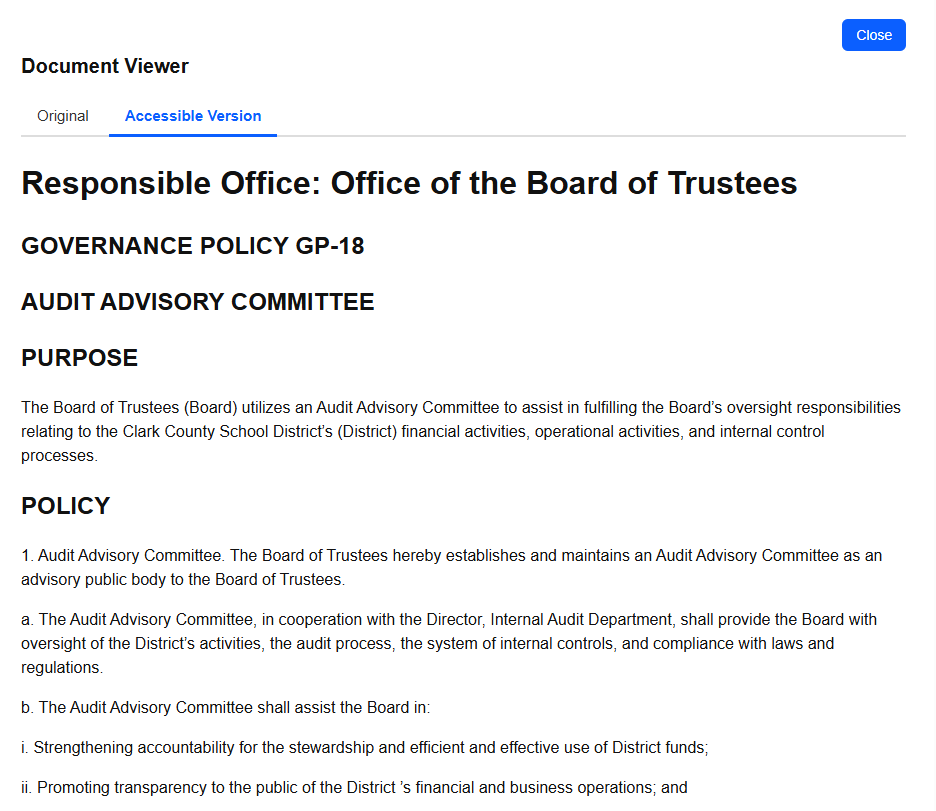
The Strategy: Automated Extraction Over Manual Tagging
autoPDFToHTML is a lightweight backend prototype designed to act as an automated accessibility overlay pipeline. Instead of relying on manual copying, pasting, and manual rich-text editor fixing, it automates structural conversion directly at the codebase level.
- Semantic Layout Parsing: The tool programmatically scans document assets, extracting raw text and mapping it to clean, hierarchical HTML markup (maintaining proper heading structures, lists, and paragraphs essential for assistive technologies).
- Zero-Bloat Code Output: Unlike typical visual editor exports that generate messy, nested inline styles, this utility outputs clean, semantic markup that immediately inherits an existing web design system’s accessible stylesheets.
- Seamless Pipeline Integration: It is engineered with a modular footprint, making it simple to drop into existing backend asset pipelines. Whenever a document is modified or uploaded, the system can automatically generate a fully compliant web page mirror.
Deep-Dive Into the Codebase
I built this prototype to emphasize execution speed, clean asset handling, and predictable markup generation. It eliminates the clunky overhead of standard document management systems and demonstrates a production-minded approach to scaling content accessibility.
You can audit the logic, fork the source code, or explore the structure directly on GitHub:
Would you like to hire me?
Interested in working together? Let's talk.
Contact